Basement Flooring Options in Edmonton: What Works, What Lasts, and How We Install It Right
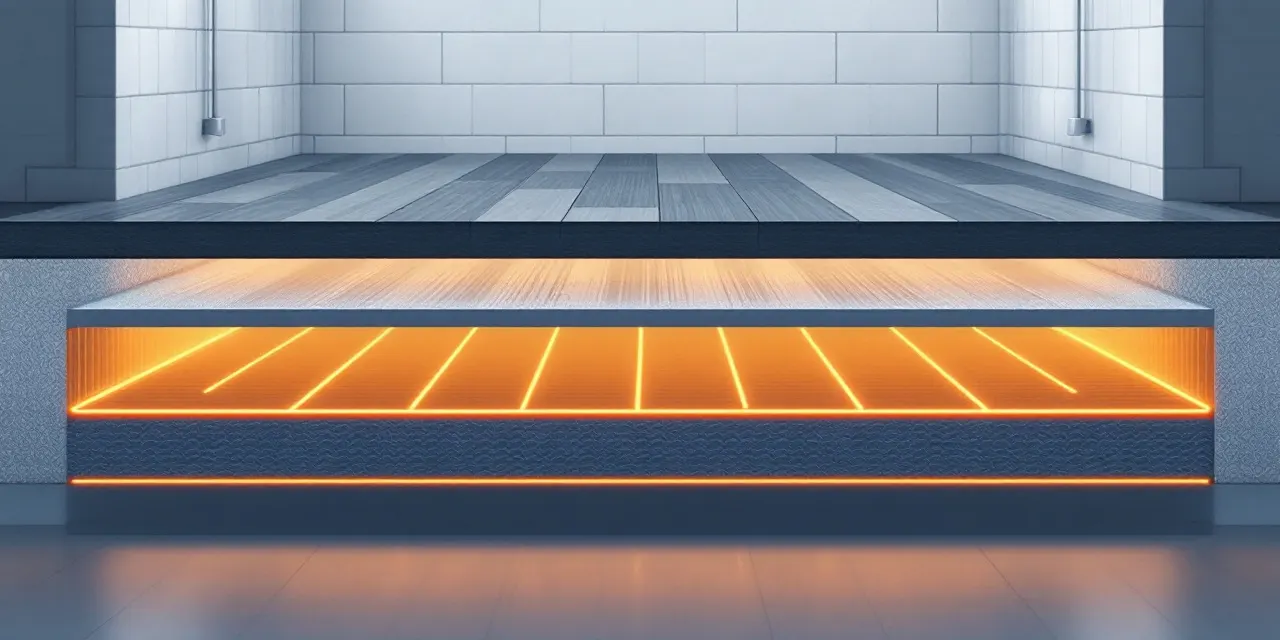
Basement floors in Edmonton take a beating. Between freeze-thaw cycles, the occasional moisture event, and concrete slabs that sit below grade all winter, the wrong flooring choice can buckle, mold, or just feel cold and unpleasant underfoot within a season or two. At Edmonton Basement Pros, we help homeowners cut through the noise and install flooring that actually holds up in this climate. Our licensed Edmonton partner crew has hands-on experience with every major basement flooring system, from subfloor platforms and in-floor radiant heating to luxury vinyl plank, rubber gym tiles, and engineered hardwood. We treat every project as its own problem to solve, not a one-size-fits-all install. Tell us what you are building down there and we will put together a free, no-obligation quote tailored to your slab, your moisture conditions, and your budget.
Why Basement Flooring in Edmonton Is a Different Problem Than the Rest of Your House
Above-grade floors sit on wood framing with airflow underneath. Basement slabs sit directly on soil, which means ground moisture is always a variable, even in homes with no visible leaks. Edmonton's cold winters also mean that an uninsulated slab can read several degrees colder than the room air, making any finished floor feel uncomfortable regardless of what material you choose.
That moisture and temperature reality shapes every flooring decision we make with homeowners here. Solid hardwood, for example, is almost never the right call in a below-grade Edmonton basement. It absorbs humidity, swells in summer, and gaps in the dry heating season. Engineered options, luxury vinyl plank, and properly prepped tile perform far better because they are dimensionally stable and less sensitive to the humidity swings Alberta basements see.
Before our local crew recommends any finished floor, they assess the slab for moisture, check for any low spots or cracks that need addressing, and confirm whether a subfloor layer is necessary. Getting this sequence right is the difference between a floor that lasts a decade and one that needs replacing in three years.
Basement Subfloor Options: Dricore, Sleepers, and Plywood Systems
A subfloor is not always optional in an Edmonton basement. If your slab is cold, slightly uneven, or prone to any ground moisture transfer, laying finished flooring directly on concrete is a shortcut that tends to come back as a problem. Our licensed Edmonton partner crew installs several subfloor systems depending on what the space needs.
Dricore panels are one of the most popular choices we install, and for good reason. Each panel sits on a grid of raised plastic feet that create an air gap between the concrete and the OSB surface above. That gap lets minor moisture vapor dissipate instead of getting trapped against the back of your finished floor. Dricore also adds a modest layer of thermal break, which takes the edge off that cold-slab feeling. For homeowners building a basement suite or a finished rec room, it is a straightforward upgrade that protects the entire floor assembly above it.
For situations where the slab has more significant unevenness, a sleeper system using pressure-treated lumber or a floating plywood assembly gives our crew more control over achieving a truly level surface before the finished floor goes down. The right system depends on your slab condition, your ceiling height budget (since subfloors do consume some headroom), and what finished material is going on top. We walk through all of that with you before any quote is finalized.
In-Floor Heating for Your Edmonton Basement: Radiant Systems That Change How the Space Feels
If there is one upgrade that consistently surprises Edmonton homeowners with how much it changes their basement experience, it is in-floor radiant heating. A basement that was previously tolerable becomes genuinely comfortable, and the effect is especially noticeable in home gyms, playrooms, and basement suites where people spend time barefoot or seated near floor level.
Our local crew installs both electric mat systems and hydronic (water-based) radiant systems depending on the scope of the project. Electric mats are well-suited to smaller areas or renovations where adding a hydronic loop is not practical. They install in a thin layer of self-leveling compound or directly under tile and connect to a dedicated thermostat. Hydronic systems involve more installation complexity but are often the better long-term choice for larger basement footprints where running costs matter.
In-floor heating works best when it is planned before the subfloor and finished floor go in, not added as an afterthought. The flooring material matters too: tile and luxury vinyl plank transfer radiant heat efficiently, while thicker materials like cork or carpet underlay work against the system. When you request a quote, our crew will factor in heating integration from the start so the entire assembly is designed to work together.
Basement Home Gym Flooring in Edmonton: Rubber, Foam, and Hybrid Options
Basement home gyms have become one of the most requested projects we work on, and the flooring requirements are genuinely different from a rec room or bedroom. You need impact absorption for dropped weights, surface grip during dynamic movement, moisture resistance for a space that sees sweat and the occasional spill, and enough durability to hold up under heavy equipment over years of use.
For most basement gym builds, our licensed Edmonton partner crew recommends rubber flooring as the primary surface. Vulcanized rubber tiles in the 8mm to 20mm thickness range are the industry standard for good reason: they absorb impact, resist compression under rack and machine feet, and clean up easily. Thicker tiles are worth the extra cost in the free-weight area. Platform areas under barbells sometimes get an additional layer or a custom rubber platform built in for extra protection to the subfloor beneath.
For mixed-use spaces where part of the basement is a gym and part is a lounge or office, we also work with hybrid layouts that transition between rubber tile zones and luxury vinyl plank or polished concrete in the adjacent area. The key is making sure the transitions are handled cleanly so the floor reads as intentional rather than patchwork. Tell us how you plan to use the space and we will recommend a layout that serves every part of it.
Finished Flooring Materials Our Crew Installs in Edmonton Basements
Once the subfloor question is resolved and any in-floor heating is planned, the finished material choice comes down to how you use the space, your moisture exposure level, and what you want it to look like. Luxury vinyl plank is currently the most popular finished floor we install in Edmonton basements, and the reasons are practical: it is waterproof, dimensionally stable, available in realistic wood and stone visuals, comfortable underfoot, and easier on knees and feet than tile on a hard slab.
Porcelain tile remains the right call for basement bathrooms, laundry areas, and utility zones where water is a near-certainty rather than a possibility. It is the most moisture-proof option available and holds up to heavy cleaning. The trade-off is that tile on concrete with no in-floor heating underneath can feel very cold in winter, which is why we often recommend pairing tile areas with a radiant mat if the budget allows.
Engineered hardwood is a reasonable option for above-average basement conditions: a slab that tests dry, good subfloor protection, and controlled humidity through the heating season. It gives a warmer, more traditional look than vinyl for homeowners who want it. Carpet remains an option for dedicated bedroom areas in basement suites, though we always spec a quality moisture-resistant underlay and confirm the slab is dry before recommending it. Every material has a use case, and part of our job is helping you match the right one to your actual basement conditions.
FAQ
What is the best basement flooring option for Edmonton's climate?
Luxury vinyl plank is the most consistently reliable choice for finished Edmonton basements because it is waterproof, stable in humidity swings, and comfortable underfoot. For wet areas like bathrooms or laundry rooms, porcelain tile is the better pick. The right answer for your specific basement also depends on slab moisture levels and whether a subfloor layer is going in first, which our local crew assesses before finalizing any recommendation.
Do I need a subfloor before installing basement flooring?
Not always, but often yes. If your slab has any detectable moisture transfer, significant cold-slab effect, or unevenness, a subfloor system like Dricore panels or a plywood assembly protects your finished floor and makes the space more comfortable. Our licensed Edmonton partner crew checks slab conditions during the quote visit and will tell you honestly whether a subfloor is necessary for your project.
How does in-floor heating work in an Edmonton basement and what floors can go over it?
In-floor radiant heating runs either electric heating mats or hydronic tubing beneath the finished floor surface, warming the floor from below rather than blowing heated air into the room. In a basement, it is one of the most effective ways to address the cold-slab feeling that makes many basements uncomfortable in winter. Tile and luxury vinyl plank are the most efficient materials to install over radiant systems. Thicker or more insulating materials reduce the system's effectiveness, so the flooring choice and heating design need to be coordinated from the start.
What flooring should I use in my basement home gym?
Rubber tile is the standard for good reason. It absorbs impact, protects your subfloor from equipment weight, provides grip, and cleans up easily after workouts. Thickness matters: thicker rubber in the free-weight and barbell area, standard thickness elsewhere. For gyms that share space with a living or office area, our crew can design a layout that transitions cleanly between rubber zones and a different finished floor in the adjacent space.
How do I get a quote for basement flooring from Edmonton Basement Pros?
Fill out the quote request form on this page and our local crew will follow up to schedule a visit. They will assess your slab, talk through how you plan to use the space, and put together a detailed free quote covering subfloor, any heating integration, and your chosen finished material. There is no obligation and no pressure, just clear information so you can make a confident decision.